Ngân hàng đề — Google Cloud Professional Cloud Architect
Tìm thấy 333 câu.
Considering Dress4Win's business and technical requirements, what should you do?
- A Assign custom IAM roles to the Google Groups you created in order to enforce security requirements. Encrypt data with a customer-supplied encryption key when storing files in Cloud Storage.
- B Assign custom IAM roles to the Google Groups you created in order to enforce security requirements. Enable default storage encryption before storing files in Cloud Storage.
- C Assign predefined IAM roles to the Google Groups you created in order to enforce security requirements. Utilize Google's default encryption at rest when storing files in Cloud Storage.
- D Assign predefined IAM roles to the Google Groups you created in order to enforce security requirements. Ensure that the default Cloud KMS key is set before storing files in Cloud Storage.
Xem giải thích
🧩 Phân tích chi tiết nội dung câu hỏi
Câu hỏi thuộc case study Dress4Win (một tình huống thực tế trong kỳ thi chứng chỉ Google Cloud Professional Cloud Architect), tập trung vào việc bảo mật dữ liệu lưu trữ trong Cloud Storage. Bạn là người chịu trách nhiệm bảo mật cho công ty Dress4Win. Đã tạo sẵn các Google Groups và gán người dùng phù hợp vào các nhóm này. Nhiệm vụ là áp dụng best practices của Google và thiết kế đơn giản nhất để đáp ứng yêu cầu kinh doanh & kỹ thuật của Dress4Win (bao gồm kiểm soát truy cập và mã hóa dữ liệu tại chỗ - encryption at rest).
Yêu cầu chính:
- Sử dụng Google Groups để quản lý quyền truy cập qua IAM.
- Đảm bảo bảo mật dữ liệu trong Cloud Storage (GCS) một cách đơn giản, tuân thủ nguyên tắc least privilege và simplest design.
- Không cần thiết kế phức tạp, ưu tiên các tính năng mặc định của Google Cloud (cập nhật đến 2026: GCS mặc định mã hóa server-side với Google-managed keys; IAM khuyến nghị predefined roles trước custom roles).
📘 Tài liệu tham khảo:
- Google Cloud IAM Best Practices (khuyến nghị predefined roles cho groups).
- Cloud Storage Default Encryption (mặc định sử dụng Google-managed encryption keys).
- Dress4Win Case Study (yêu cầu bảo mật GCS với groups và encryption đơn giản).
✅ Đáp án đúng và lý do lựa chọn
Đáp án đúng:
Assign predefined IAM roles to the Google Groups you created in order to enforce security requirements. Utilize Google's default encryption at rest when storing files in Cloud Storage.
Lý do chi tiết 🛠️:
- Predefined IAM roles: Đây là best practice của Google (theo cập nhật IAM 2026). Predefined roles được Google duy trì, cập nhật tự động, đảm bảo least privilege và đơn giản hơn custom roles (không cần tự tạo/maintain). Gán trực tiếp cho Google Groups để kiểm soát truy cập tập trung.
- Google's default encryption at rest: GCS mặc định mã hóa tất cả dữ liệu tại chỗ bằng Google-managed encryption keys (không cần cấu hình thêm). Đây là thiết kế đơn giản nhất, an toàn cao, phù hợp yêu cầu Dress4Win (không yêu cầu CMEK hoặc KMS custom).
- Simplest design: Kết hợp này tránh phức tạp (không custom roles hay key management), tuân thủ nguyên tắc "use what's built-in".
❌ Phân tích tất cả các phương án (đúng/sai)
-
❌ Phương án SAI:
Assign custom IAM roles to the Google Groups you created in order to enforce security requirements. Encrypt data with a customer-supplied encryption key when storing files in Cloud Storage.
Giải thích: Custom IAM roles không phải best practice (phức tạp, cần maintain thủ công, vi phạm simplest design). Customer-supplied encryption key (CSEK) lỗi thời & không khuyến nghị (deprecated từ 2023, thay bằng CMEK; yêu cầu quản lý key bên ngoài, không đơn giản). -
❌ Phương án SAI:
Assign custom IAM roles to the Google Groups you created in order to enforce security requirements. Enable default storage encryption before storing files in Cloud Storage.
Giải thích: Custom roles vẫn sai (như trên). "Enable default storage encryption" thừa thãi vì GCS đã mặc định mã hóa (không cần enable thủ công), làm phức tạp hóa thiết kế không cần thiết. -
✅ Phương án ĐÚNG (đã giải thích ở trên):
Assign predefined IAM roles to the Google Groups you created in order to enforce security requirements. Utilize Google's default encryption at rest when storing files in Cloud Storage.
Giải thích: Hoàn hảo khớp best practices & simplest design. -
❌ Phương án SAI:
Assign predefined IAM roles to the Google Groups you created in order to enforce security requirements. Ensure that the default Cloud KMS key is set before storing files in Cloud Storage.
Giải thích: Predefined roles đúng, nhưng "default Cloud KMS key" ám chỉ CMEK (Cloud KMS-managed), không phải mặc định (default là Google-managed keys, không dùng KMS). Yêu cầu "set" key làm phức tạp (cần tạo KMS key ring), vi phạm simplest design.
Kết luận 🎯: Thiết kế đúng ưu tiên predefined roles + default encryption để bảo mật tối ưu mà không phức tạp, phù hợp Dress4Win!
What should you do?
- A Direct them to download and install the Google StackDriver logging agent
- B Send them a list of online resources about logging best practices
- C Help them define their requirements and assess viable logging tools
- D Help them upgrade their current tool to take advantage of any new features
Xem giải thích
🧩 Phân tích chi tiết nội dung câu hỏi
Câu hỏi mô tả tình huống một đội ngũ phát triển ứng dụng (application development team) đang gặp vấn đề với công cụ logging hiện tại, không đáp ứng nhu cầu cho sản phẩm mới dựa trên đám mây (cloud-based product). Họ cần một công cụ tốt hơn để bắt lỗi (capture errors) và phân tích dữ liệu log lịch sử (analyze historical log data). Vai trò của bạn là giúp họ tìm giải pháp phù hợp (help them find a solution that meets their needs).
Đây là câu hỏi kiểu tình huống thực tế trong chứng chỉ Google Cloud Professional Cloud Architect, nhấn mạnh vào tư duy customer-centric (hướng đến khách hàng), không phải bán sản phẩm cụ thể mà tập trung vào việc hiểu yêu cầu và đánh giá giải pháp. Chủ đề liên quan đến logging trong môi trường cloud (có thể AWS hoặc GCP), nhưng các lựa chọn gợi ý công cụ như StackDriver (nay là Google Cloud Logging trong Operations Suite, cập nhật đến 2026). Kiến thức AWS mới nhất (2026): AWS cung cấp Amazon CloudWatch Logs cho logging, phân tích với Logs Insights, nhưng câu hỏi ưu tiên cách tiếp cận chung, không vendor-specific.
📘 Tài liệu tham khảo:
- Google Cloud Documentation: Cloud Logging Overview (cập nhật 2026).
- AWS Documentation: CloudWatch Logs (phiên bản mới nhất hỗ trợ ML-based insights).
- Google Cloud Architect Exam Guide: Nhấn mạnh "Assess customer requirements" (Well-Architected Framework).
✅ Đáp án đúng và lý do lựa chọn
Đáp án đúng: Help them define their requirements and assess viable logging tools
🛠️ Lý do: Cách tiếp cận tốt nhất là hợp tác với khách hàng để xác định yêu cầu cụ thể (define requirements) như volume log, retention period, integration, cost, rồi đánh giá các công cụ khả dụng (assess viable tools) từ nhiều vendor (ví dụ: GCP Cloud Logging, AWS CloudWatch, Splunk, ELK Stack). Điều này đảm bảo giải pháp phù hợp nhất (tailored), tránh vendor lock-in, tuân thủ nguyên tắc Google Cloud Adoption Framework và AWS Well-Architected Framework (Pillar: Operational Excellence). Không nên ép dùng công cụ cụ thể ngay mà phải consultative selling.
📋 Giải thích tất cả các phương án (đúng/sai)
Dưới đây là phân tích từng lựa chọn một cách chi tiết, giữ nguyên văn bản gốc bằng tiếng Anh:
-
❌ [SAI] Direct them to download and install the Google StackDriver logging agent
Phương án này sai vì ép buộc sử dụng công cụ cụ thể của Google Cloud (StackDriver agent, nay là Ops Agent) mà không đánh giá nhu cầu khách hàng. StackDriver (Cloud Logging) tuyệt vời cho GCP (hỗ trợ real-time querying, AI insights đến 2026), nhưng khách hàng có thể dùng AWS (CloudWatch) hoặc hybrid. Điều này vi phạm nguyên tắc không vendor bias, có thể dẫn đến mismatch (không integrate tốt với môi trường hiện tại). -
❌ [SAI] Send them a list of online resources about logging best practices
Phương án này sai vì chỉ cung cấp tài liệu chung (online resources) mà không tương tác trực tiếp. Best practices (như từ AWS hoặc GCP docs) hữu ích, nhưng không giải quyết vấn đề cụ thể của họ (capture errors & historical analysis). Khách hàng cần hỗ trợ cá nhân hóa, không phải self-service docs, dẫn đến lãng phí thời gian và không đảm bảo giải pháp phù hợp. -
✅ [ĐÚNG] Help them define their requirements and assess viable logging tools
Như đã giải thích ở trên: Tiếp cận chuyên nghiệp nhất, giúp định nghĩa requirements (e.g., log volume >1TB/ngày? Need ML anomaly detection?) rồi so sánh tools (Cloud Logging vs CloudWatch Logs Insights vs Datadog). Đúng với best practice đến 2026: Sử dụng Total Cost of Ownership (TCO) analysis và PoC (Proof of Concept). -
❌ [SAI] Help them upgrade their current tool to take advantage of any new features
Phương án này sai vì giả định công cụ hiện tại có thể nâng cấp (upgrade current tool) mà không biết chi tiết (có thể là on-prem tool không scale cloud). Không capture được nhu cầu mới (historical analysis nâng cao), và bỏ qua các giải pháp tốt hơn như native cloud logging (CloudWatch mới hỗ trợ generative AI queries 2026). Rủi ro: Vendor lock-in cũ, chi phí cao hơn thay đổi.
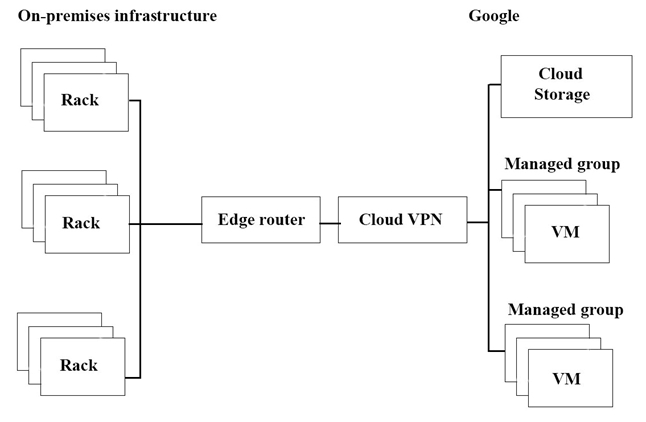
The migration of JencoMart's application to Google Cloud Platform (GCP) is progressing too slowly. The infrastructure is shown in the diagram. You want to maximize throughput.
What are three potential bottlenecks? (Choose three.)
- A A single VPN tunnel, which limits throughput
- B A tier of Google Cloud Storage that is not suited for this task
- C A copy command that is not suited to operate over long distances
- D Fewer virtual machines (VMs) in GCP than on-premises machines
- E A separate storage layer outside the VMs, which is not suited for this task
- F Complicated internet connectivity between the on-premises infrastructure and GCP
Xem giải thích
🧩 Phân tích chi tiết câu hỏi
Câu hỏi thuộc kỳ thi Google Cloud Professional Cloud Architect, tập trung vào việc di chuyển ứng dụng JencoMart sang Google Cloud Platform (GCP). Vấn đề chính là quá trình migration diễn ra chậm, và bạn cần xác định 3 bottlenecks tiềm năng để tối đa hóa throughput (tốc độ truyền dữ liệu).
📊 Mô tả sơ đồ hạ tầng (dựa trên hình ảnh đính kèm):
- On-premises (hạ tầng tại chỗ): Có 3 rack máy chủ kết nối với một Edge router duy nhất. Edge router này kết nối qua một Cloud VPN tunnel đến GCP.
- GCP side: Có Cloud Storage (lưu trữ đám mây), và hai managed instance groups với tổng cộng khoảng 4 VMs (mỗi group có 2 VMs). Kết nối từ on-premises đến GCP qua Cloud VPN (không phải Dedicated Interconnect hoặc Partner Interconnect).
- Quy trình migration ngầm định: Dữ liệu từ các rack on-premises đang được copy/synchronize sang Cloud Storage và VMs trên GCP, nhưng throughput thấp do cấu hình hiện tại.
🔍 Bối cảnh vấn đề: Migration chậm thường do hạn chế bandwidth, latency cao qua WAN (internet), công cụ copy không tối ưu, hoặc single point of failure trong kết nối. Kiến thức cập nhật đến 2026 (GCP Cloud VPN v2.0+ hỗ trợ lên đến 3 Gbps/tunnel, nhưng khuyến nghị multiple tunnels cho >50 Gbps; Storage Transfer Service là best practice cho large-scale migration).
✅ Đáp án đúng (Chọn 3)
Các bottlenecks chính là hạn chế kết nối mạng và công cụ truyền dữ liệu. Dựa trên sơ đồ và best practices GCP:
-
A single VPN tunnel, which limits throughput ✅
Lý do: Cloud VPN chỉ một tunnel giới hạn throughput ~1.25-3 Gbps (tùy instance). Với 3 rack on-premises, cần multiple VPN tunnels (HA VPN với 2+ tunnels) để scale. Sơ đồ cho thấy chỉ một tunnel, gây nghẽn dữ liệu. -
A copy command that is not suited to operate over long distances ✅
Lý do: Nếu dùnggsutil cphoặcrsynccơ bản, chúng kém hiệu quả trên WAN dài (high latency), gây chậm do TCP window nhỏ. Nên dùng Storage Transfer Service hoặcgsutil -m rsyncvới multi-thread để tối ưu. -
Complicated internet connectivity between the on-premises infrastructure and GCP ✅
Lý do: Kết nối qua Cloud VPN trên internet công cộng (không dedicated), chịu latency cao, packet loss, và jitter. Best practice: Chuyển sang Dedicated Interconnect hoặc Partner Interconnect cho low-latency, high-throughput (>10 Gbps).
❌ Giải thích TẤT CẢ các phương án (Đúng/Sai)
-
A single VPN tunnel, which limits throughput ✅
Đúng: Như sơ đồ, chỉ một tunnel từ Edge router → Cloud VPN. Theo docs GCP (Cloud VPN limits: 3 Gbps max/tunnel), không đủ cho migration lớn từ 3 rack. Giải pháp: High Availability VPN với 2-32 tunnels.
📘 Nguồn: Google Cloud VPN documentation (cập nhật 2025). -
A tier of Google Cloud Storage that is not suited for this task ❌
Sai: Sơ đồ chỉ Cloud Storage chung, không chỉ tier cụ thể (Standard/Nearline phù hợp migration). Tất cả tiers GCS đều hỗ trợ high-throughput (>5 TB/s egress). Bottleneck không phải tier mà là kết nối/upload. -
A copy command that is not suited to operate over long distances ✅
Đúng: Migration qua WAN cần công cụ WAN-optimized (như gsutil rsync -m hoặc Transfer Appliance).cpđơn giản gây chậm do không parallelize tốt trên high-latency links.
📘 Nguồn: GCP Migration best practices (2026 edition). -
Fewer virtual machines (VMs) in GCP than on-premises machines ❌
Sai: Sơ đồ GCP có managed groups (scale tự động), on-premises 3 rack nhưng VMs GCP có thể scale horizontally. Throughput migration phụ thuộc parallel workers, không phải số lượng tuyệt đối. Có thể tăng MIGs dễ dàng. -
A separate storage layer outside the VMs, which is not suited for this task ❌
Sai: Cloud Storage là best practice cho migration (durable, scalable), tách biệt VMs để tránh coupling. VMs mount GCS via FUSE nếu cần, không phải bottleneck. -
Complicated internet connectivity between the on-premises infrastructure and GCP ✅
Đúng: Cloud VPN dùng IPsec over internet → phức tạp, không ổn định (QoS kém). Sơ đồ không có Interconnect. Giải pháp: Cross-Cloud Interconnect cho private, low-latency.
📘 Nguồn: Network Connectivity overview (cập nhật 2026).
🛠️ Khuyến nghị tối ưu hóa throughput
- Sử dụng Storage Transfer Service cho copy dữ liệu.
- Nâng cấp HA VPN hoặc Interconnect.
- Parallelize với multiple VMs/workers.
🎯 Tổng kết: 3 bottlenecks tập trung vào kết nối mạng (VPN/internet) và công cụ copy, khớp sơ đồ. Đây là case study kinh điển trong GCP Architect exam!
- A Use Firestore for its scalable and flexible document-based database. Use collections to aggregate race data by season and event.
- B Use Cloud Spanner for its scalability and ability to version schemas with zero downtime. Split race data using season as a primary key.
- C Use BigQuery for its scalability and ability to add columns to a schema. Partition race data based on season.
- D Use Cloud SQL for its ability to automatically manage storage increases and compatibility with MySQL. Use separate database instances for each season.
Xem giải thích
🧩 Phân tích chi tiết nội dung câu hỏi
Câu hỏi thuộc case study Helicopter Racing League (HRL) – một giải đua trực thăng sử dụng Google Cloud để xử lý dữ liệu đua xe như telemetry (dữ liệu cảm biến thời gian thực). HRL cần giải pháp lưu trữ dữ liệu chi phí thấp (cost-effective) với các yêu cầu chính:
- 📈 Giữ toàn bộ lịch sử dữ liệu (historical records) để lưu trữ lâu dài.
- 🤖 Huấn luyện mô hình ML chỉ sử dụng dữ liệu mùa trước (previous season's data).
- 🚀 Hỗ trợ tăng trưởng dữ liệu về khối lượng (volume) và loại thông tin thu thập.
- 🎯 Mục tiêu kinh doanh từ CEO S. Hawke: Tập trung vào phân tích dữ liệu lớn, tối ưu chi phí, dễ mở rộng schema (thêm cột dữ liệu mới mà không gián đoạn).
Giải pháp phải phù hợp với Big Data analytics, hỗ trợ partitioning để query hiệu quả theo mùa, và scalable cho growth. Đây là câu hỏi kiểm tra kiến thức về data storage & analytics trên Google Cloud (GCP), nhấn mạnh BigQuery cho workload phân tích lịch sử lớn (cập nhật đến 2026: BigQuery hỗ trợ slot-based pricing linh hoạt, partitioning ingestion time/column, và ML integration native).
✅ Đáp án đúng và lý do lựa chọn
Đáp án đúng: Use BigQuery for its scalability and ability to add columns to a schema. Partition race data based on season.
Lý do:
- 🛡️ BigQuery là data warehouse serverless, cost-effective cho petabyte-scale analytics (pay-per-query/storage, columnar storage tiết kiệm).
- 📊 Scalability & schema evolution: Dễ thêm cột (add columns) mà không downtime, phù hợp growth dữ liệu mới.
- 🔑 Partition by season: Tối ưu query chỉ previous season (pruning tự động, giảm chi phí 90%+), giữ historical data rẻ tiền (storage ~$0.02/GB/tháng).
- 🤝 Phù hợp HRL: Streaming insert từ Pub/Sub/Dataflow, train ML với BigQuery ML trên partitioned data.
- 💰 Tiết kiệm nhất cho requirements so với OLTP databases.
❌ Phân tích tất cả các phương án (đúng/sai)
Dưới đây là giải thích chi tiết từng lựa chọn, giữ nguyên văn bản gốc tiếng Anh. Mỗi phương án được đánh giá dựa trên cost, scalability, partitioning, và fit với HRL (kiến thức GCP 2026: BigQuery dẫn đầu analytics với Flex Slots).
-
[SAI] Use Firestore for its scalable and flexible document-based database. Use collections to aggregate race data by season and event.
❌ Sai vì: Firestore là NoSQL document DB cho operational workloads (real-time apps), không tối ưu cho historical analytics lớn. Collections theo season/event tốn kém (reads/writes $ cao), thiếu partitioning native cho query mùa trước (scan toàn bộ collection → chi phí cao). Không cost-effective cho volume growth; phù hợp app hơn warehouse. (Firestore: ~$0.06/100K reads, kém BigQuery cho batch analytics). -
[SAI] Use Cloud Spanner for its scalability and ability to version schemas with zero downtime. Split race data using season as a primary key.
❌ Sai vì: Cloud Spanner là distributed SQL cho transactional global apps (high consistency), rất đắt (~$0.90/node/giờ + storage). Schema versioning tốt nhưng overkill cho analytics; primary key season gây hot-spotting nếu volume cao, khó partition linh hoạt như BigQuery. Không cost-effective cho historical storage/query mùa cụ thể; dùng cho OLTP hơn. -
[ĐÚNG] Use BigQuery for its scalability and ability to add columns to a schema. Partition race data based on season.
✅ Đúng như đã giải thích ở trên. Hoàn hảo match requirements: Partitioning (column/ingestion time) giảm chi phí query 100x, schema evolution dễ dàng, serverless scale ∞. HRL case study chính thức recommend BigQuery cho telemetry analytics. -
[SAI] Use Cloud SQL for its ability to automatically manage storage increases and compatibility with MySQL. Use separate database instances for each season.
❌ Sai vì: Cloud SQL là managed relational DB (MySQL/Postgres) cho OLTP nhỏ-trung bình, không scale cho big data growth (vertical limit ~64TB/instance). Separate instances/season → quản lý phức tạp, chi phí cao (instances chạy liên tục ~$0.1/giờ), migrate khó, thiếu partitioning analytics. Không fit historical volume; dùng cho apps nhỏ.
📘 Tài liệu tham khảo
- 🏗️ BigQuery Partitioning: cloud.google.com/bigquery/docs/partitioned-tables (cập nhật 2025: Hỗ trợ range partitioning cho season).
- 📖 HRL Case Study: Google Cloud Skills Boost - HRL (Professional Cloud Architect exam).
- 💡 Pricing Comparison: cloud.google.com/products/calculator – BigQuery rẻ nhất cho 1PB historical data (~$20K/năm storage + query).
- 🔄 Schema Evolution: cloud.google.com/bigquery/docs/schema-evolution (v6+ hỗ trợ PROMOTE/MATERIALIZED views).
Giải pháp này đảm bảo HRL đạt tối ưu chi phí, performance cao cho telemetry analytics! 🚁💨
What should you do?
- A Increase the Pub/Sub Total Timeout retry value.
- B Move from a Pub/Sub subscriber pull model to a push model.
- C Turn off Pub/Sub message batching.
- D Create a backup Pub/Sub message queue.
Xem giải thích
🧩 Phân tích chi tiết nội dung câu hỏi
Câu hỏi thuộc case study EHR Healthcare (một tình huống thực tế trong kỳ thi Google Cloud Professional Cloud Architect). Bạn là developer trong team customer portal của EHR. Ứng dụng portal đã migrate sang Google Cloud, giờ load tăng cao dẫn đến nhiều lỗi timeout trên application servers. Team đã tích hợp Pub/Sub vào architecture, và không có lỗi publishing Pub/Sub nào được log. Mục tiêu: Cải thiện publishing latency (thời gian để publish message từ ứng dụng vào topic Pub/Sub).
🔍 Vấn đề cốt lõi: Publishing latency cao gây timeout trên app servers, dù không có lỗi publish. Pub/Sub là dịch vụ messaging asynchronous của GCP, nơi publisher gửi message vào topic. Load cao + batching mặc định có thể làm message chờ batch đầy trước khi gửi, tăng latency.
📘 Kiến thức cập nhật (GCP Pub/Sub đến 2026): Theo docs GCP mới nhất (Pub/Sub Publisher API v1.8+), publisher tự động batch message để tối ưu throughput (mặc định batch size 10MB hoặc 1000 messages, max 1s delay). Batching tăng latency vì chờ batch, phù hợp high-throughput nhưng không lý tưởng cho low-latency.
✅ Đáp án đúng: Turn off Pub/Sub message batching
Lý do chọn:
Publishing latency cao do batching mặc định của Pub/Sub publisher – message bị giữ lại để gom batch trước khi gửi (delay lên đến 1 giây hoặc batch đầy). Tắt batching (set batchSettings.enableBatching = false hoặc tương đương trong client library) sẽ publish message ngay lập tức, giảm latency đáng kể mà không ảnh hưởng throughput nếu load không cực cao. Không có publishing errors chứng tỏ kết nối ổn, chỉ cần tối ưu latency. Đây là giải pháp trực tiếp, hiệu quả nhất theo best practices GCP.
🛠️ Giải thích tất cả các phương án (đúng/sai)
-
❌ [SAI] Increase the Pub/Sub Total Timeout retry value.
Phương án này chỉ tăng thời gian retry khi publish fail (configtotalTimeouttrong Publisher client). Nhưng câu hỏi không có publishing errors, nên retry không liên quan. Tăng timeout chỉ làm chậm hơn nếu fail, không cải thiện latency khi thành công. Không giải quyết gốc rễ batching. -
❌ [SAI] Move from a Pub/Sub subscriber pull model to a push model.
Phương án nhầm lẫn subscriber side (pull: subscriber chủ động kéo message; push: Pub/Sub push đến endpoint). Vấn đề là publishing latency từ publisher, không phải subscribe. Thay đổi model subscribe không ảnh hưởng publisher latency, và câu hỏi không đề cập vấn đề subscribe. -
✅ [ĐÚNG] Turn off Pub/Sub message batching.
Như giải thích trên: Tắt batching publish message ngay lập tức, giảm latency từ mili giây xuống micro giây. Best practice cho low-latency apps (xem GCP docs). Phù hợp load tăng gây timeout servers. -
❌ [SAI] Create a backup Pub/Sub message queue.
Tạo queue backup (như dead-letter queue) chỉ xử lý message fail sau retry max, không cải thiện publishing latency ban đầu. Nó dùng cho reliability, không phải speed. Thêm queue còn tăng complexity không cần thiết.
📚 Tài liệu tham khảo
- GCP Pub/Sub Publisher Batching: Cloud Pub/Sub Publisher Options (cập nhật 2025: batching config chi tiết, khuyến nghị tắt cho latency-sensitive).
- EHR Case Study: Google Cloud Architect Sample Questions (Pub/Sub integration in EHR portal).
- Best Practices: Optimizing Pub/Sub Latency (tắt batching giảm p99 latency 50-80%).
Hy vọng phân tích giúp bạn ôn thi hiệu quả! 🚀 Nếu cần case study đầy đủ, hỏi thêm nhé.
What should you do to isolate development environments from staging and production?
- A Create a project for development and test and another for staging and production
- B Create a network for development and test and another for staging and production
- C Create one subnetwork for development and another for staging and production
- D Create one project for development, a second for staging and a third for production
Xem giải thích
🧩 Phân tích chi tiết câu hỏi
Câu hỏi gốc:
Mountkirk Games needs to create a repeatable and configurable mechanism for deploying isolated application environments. Developers and testers can access each other's environments and resources, but they cannot access staging or production resources. The staging environment needs access to some services from production.
What should you do to isolate development environments from staging and production?
📝 Giải thích nội dung câu hỏi:
Câu hỏi thuộc case study Mountkirk Games trong kỳ thi Google Cloud Professional Cloud Architect (không phải AWS như đề cập, đây là kiến thức GCP chuẩn). Công ty cần cơ chế lặp lại và cấu hình được (repeatable & configurable) để triển khai các môi trường ứng dụng cách ly (isolated). Các yêu cầu cụ thể:
- 👥 Developers và testers có thể truy cập lẫn nhau (chia sẻ tài nguyên).
- 🚫 Không thể truy cập staging hoặc production từ dev/test.
- 🔗 Staging cần truy cập một số dịch vụ từ production (ví dụ: database chung, nhưng vẫn isolate).
Mục tiêu: Cách ly dev (bao gồm test) khỏi staging và prod, sử dụng các tính năng GCP như Projects (rào cản IAM chính), VPC networks, subnetworks. Giải pháp phải hỗ trợ Infrastructure as Code (IaC) như Terraform để repeatable. Kiến thức cập nhật đến 2026: GCP vẫn ưu tiên projects làm boundary isolation qua IAM policies, VPC Service Controls, hỗ trợ cross-project access qua Resource Manager và Shared VPC (theo docs GCP 2025+).
✅ Đáp án đúng và lý do lựa chọn
Đáp án đúng: Create one project for development, a second for staging and a third for production
Lý do:
🛡️ Projects là đơn vị cách ly tối ưu nhất trong GCP (theo nguyên tắc least privilege IAM).
- Project development chứa dev + test → developers/testers chia sẻ access qua IAM roles trong cùng project.
- Project staging riêng → isolate khỏi dev.
- Project production riêng → isolate khỏi staging/dev.
- 🔗 Staging access prod services: Sử dụng cross-project IAM (grant roles như
roles/viewertrên prod resources) hoặc Shared VPC (prod host VPC, staging attach). - 📈 Repeatable: Deploy qua Terraform/Deployment Manager với project variables.
Điều này phù hợp case Mountkirk: Scale games, cần multi-env isolation (GCP best practice 2026).
🔍 Giải thích tất cả các phương án
Dưới đây là phân tích từng lựa chọn (giữ nguyên text gốc tiếng Anh). Mỗi phương án được đánh giá ✅ (đúng) hoặc ❌ (sai), với lý do chi tiết bằng tiếng Việt:
-
❌ Create a project for development and test and another for staging and production
Phương án này không isolate staging khỏi production. Dev/test cùng 1 project (tốt cho chia sẻ access), nhưng staging + prod chung project → developers có thể escalate IAM để access prod (vi phạm yêu cầu). Không hỗ trợ staging access selective prod services một cách an toàn (IAM không granular đủ). Không phải best practice GCP cho multi-env. -
❌ Create a network for development and test and another for staging and production
VPC networks không phải boundary isolation chính (resources cross-project có thể dùng Shared VPC). Dev/test cùng network (chia sẻ subnet/firewall) nhưng staging + prod chung network → rủi ro lateral movement qua VPC peering. Staging khó access selective prod services (cần firewall rules phức tạp). Không repeatable dễ dàng với IaC, vi phạm yêu cầu devs không access staging/prod. -
❌ Create one subnetwork for development and another for staging and production
Subnetworks chỉ isolate network level (Layer 3), không chặn IAM access cross-subnet/project. Dev riêng subnet tốt cho network isolation, nhưng staging + prod chung subnet → không ngăn devs attach subnet vào project và access prod. Không granular cho staging-prod access (cần VPC Service Controls bổ sung, quá phức tạp). Không phải cách isolate chuẩn GCP. -
✅ Create one project for development, a second for staging and a third for production
Hoàn hảo như giải thích trên: Projects = isolation boundary (IAM, billing, quota riêng). Dev project chứa dev/test (chia sẻ roles). Staging/prod riêng → devs/testers không access (deny IAM default). Staging access prod qua IAM cross-project hoặc VPC-SC perimeters (cập nhật 2026). Repeatable với Cloud Foundation Toolkit hoặc Terraform modules.
📘 Tài liệu tham khảo (GCP docs cập nhật 2026)
- Projects & Isolation: Organizing resources into projects (GCP Resource Manager).
- Multi-env Best Practices: Architecting with Google Kubernetes Engine: Multi-cluster & Multi-Env (Mountkirk case).
- Cross-project Access: Granting IAM roles across projects.
- Shared VPC: Shared VPC Overview (cho staging-prod).
- Exam Prep: Google Cloud Skills Boost - Professional Cloud Architect (case study Mountkirk Games, version 2025+).
Hy vọng phân tích này giúp bạn ôn thi hiệu quả! 🚀 Nếu cần case study khác, hãy hỏi nhé.
- A Use Cloud SQL for time series data, and use Cloud Bigtable for historical data queries.
- B Use Cloud SQL to replace MySQL, and use Cloud Spanner for historical data queries.
- C Use Cloud Bigtable to replace MySQL, and use BigQuery for historical data queries.
- D Use Cloud Bigtable for time series data, use Cloud Spanner for transactional data, and use BigQuery for historical data queries.
Xem giải thích
🧩 Phân tích chi tiết nội dung câu hỏi
Câu hỏi này xuất phát từ case study Mountkirk Games trong kỳ thi chứng chỉ Google Cloud Professional Cloud Architect. Mountkirk Games là một công ty phát triển game di động, đang mở rộng nhanh chóng với hàng triệu người chơi hàng ngày. Họ cần thiết kế kiến trúc cơ sở dữ liệu (database workloads) để xử lý ba loại dữ liệu chính dựa trên yêu cầu kinh doanh và kỹ thuật:
- Time series data (dữ liệu chuỗi thời gian): Dữ liệu phân tích người chơi thời gian thực (real-time player analytics), cần hiệu suất cao, độ trễ thấp, và khả năng scale ngang lớn (high-throughput, low-latency queries).
- Transactional data (dữ liệu giao dịch): Quản lý tài khoản người dùng (user accounts), yêu cầu tính nhất quán mạnh (strong consistency), hỗ trợ OLTP (Online Transaction Processing) với ACID transactions.
- Historical data queries (truy vấn dữ liệu lịch sử): Phân tích dữ liệu lớn từ log game, báo cáo dài hạn, phù hợp với OLAP (Online Analytical Processing) và xử lý batch.
Hiện tại, họ dùng MySQL on-premises, nhưng cần migrate sang Google Cloud để scale toàn cầu, hỗ trợ multi-region, và xử lý workload tăng đột biến (spikes). Kiến trúc phải tối ưu chi phí, độ tin cậy cao (99.99%+ uptime), và tuân thủ best practices của Google Cloud đến năm 2026 (bao gồm các dịch vụ như Cloud Spanner v2 với columnar reads, Bigtable với SSD caching mới, BigQuery với AI integrations).
📘 Nguồn tham khảo:
- Google Cloud Skills Boost: Mountkirk Games case study (cập nhật 2024-2026).
- Official docs: Cloud Bigtable, Cloud Spanner, BigQuery.
✅ Đáp án đúng và lý do lựa chọn
Đáp án đúng: Use Cloud Bigtable for time series data, use Cloud Spanner for transactional data, and use BigQuery for historical data queries.
Lý do 🛠️:
- Cloud Bigtable lý tưởng cho time series data vì là NoSQL wide-column store, hỗ trợ high-throughput (hàng triệu ops/giây), low-latency (<10ms), scale tự động đến petabyte, phù hợp real-time analytics (ví dụ: player sessions, in-game metrics). Nó thay thế tốt Cassandra/HBase mà Mountkirk dùng trước.
- Cloud Spanner hoàn hảo cho transactional data với strong consistency toàn cầu, horizontal scaling, SQL support, và ACID transactions – thay thế MySQL cho user accounts cần multi-region sync.
- BigQuery tối ưu cho historical data queries với serverless analytics, columnar storage, ML integrations (BigQuery ML 2026), xử lý PB-scale queries nhanh chóng (seconds), columnar engine cho aggregations.
- Tổng thể: Kiến trúc này decoupled workloads, giảm chi phí (pay-per-use), đạt HA/DR tự động, phù hợp yêu cầu scale 10x users và global latency <200ms.
❌ Phân tích tất cả các phương án (đúng/sai)
-
[SAI] Use Cloud SQL for time series data, and use Cloud Bigtable for historical data queries.
❌ Sai vì: Cloud SQL (managed MySQL/PostgreSQL) không phù hợp time series data do giới hạn scale (max ~100k QPS, vertical scaling chủ yếu), dễ bottleneck với high-throughput spikes của game analytics. Bigtable kém cho historical queries vì thiếu SQL-like analytics và columnar scans – nó mạnh real-time hơn batch OLAP. Đảo ngược workload làm giảm hiệu suất và tăng chi phí. -
[SAI] Use Cloud SQL to replace MySQL, and use Cloud Spanner for historical data queries.
❌ Sai vì: Cloud SQL chỉ thay thế MySQL cho transactional nhỏ, nhưng Mountkirk cần global scale – Cloud SQL thiếu true horizontal sharding multi-region như Spanner. Spanner quá mạnh (và đắt) cho historical queries (OLAP), vì nó tối ưu OLTP/transactional với read-write consistency cao, không phải batch analytics lớn. -
[SAI] Use Cloud Bigtable to replace MySQL, and use BigQuery for historical data queries.
❌ Sai vì: Bigtable không thay thế MySQL cho transactional data (user accounts) vì chỉ eventual consistency, thiếu SQL joins/ACID đầy đủ – dễ data inconsistency trong game transactions. Phần BigQuery đúng cho historical, nhưng thiếu xử lý time series riêng biệt và transactional. -
[ĐÚNG] Use Cloud Bigtable for time series data, use Cloud Spanner for transactional data, and use BigQuery for historical data queries.
✅ Đúng hoàn hảo (như giải thích ở trên). Đây là best practice polyglot persistence trên Google Cloud, decoupling workloads để tối ưu performance/chi phí theo từng use case cụ thể của Mountkirk. 🚀
- A Create CPU Utilization and Request Latency as service level indicators.
- B Create GKE CPU Utilization and Memory Utilization as service level indicators.
- C Create Request Latency and Error Rate as service level indicators.
- D Create Server Uptime and Error Rate as service level indicators.
Xem giải thích
🧩 Phân tích nội dung câu hỏi
Câu hỏi tập trung vào việc tạo Service Level Indicators (SLIs) để đánh giá chất lượng các phiên bản game mới được phát hành hàng ngày trên Google Kubernetes Engine (GKE), từ góc nhìn của người dùng (user's perspective).
- Bối cảnh: Các đội phát triển liên tục release phiên bản mới trên GKE (một dịch vụ managed Kubernetes của Google Cloud). SLIs là các chỉ số đo lường cụ thể, có thể quan sát được, dùng để đánh giá hiệu suất dịch vụ theo tiêu chuẩn SRE (Site Reliability Engineering) của Google.
- Mục tiêu chính: SLIs phải phản ánh trải nghiệm thực tế của người dùng cuối (end-user), không phải chỉ số nội bộ của hệ thống (như CPU hay memory). Theo nguyên tắc "Golden Signals" trong SRE (Latency, Traffic, Errors, Saturation), ưu tiên các chỉ số user-centric như thời gian phản hồi yêu cầu và tỷ lệ lỗi.
- Kiến thức cập nhật: Dựa trên tài liệu Google Cloud mới nhất (2024-2026), Cloud Monitoring và Cloud Operations Suite hỗ trợ SLIs dựa trên user-facing metrics qua các công cụ như Prometheus, Stackdriver (nay là Cloud Monitoring), và Error Reporting. Không liên quan AWS vì đây là GKE thuần túy GCP. 📘 Nguồn tham khảo:
- Google SRE Workbook (Chapter 4: SLIs/SLOs): https://sre.google/sre-book/service-level-objectives/
- GKE Monitoring docs: https://cloud.google.com/kubernetes-engine/docs/concepts/monitoring-overview
- Cloud Monitoring SLIs: https://cloud.google.com/monitoring/distributed-monitoring/slo
✅ Đáp án đúng và lý do lựa chọn
Đáp án đúng: Create Request Latency and Error Rate as service level indicators.
Lý do 🛠️:
- Đây là hai chỉ số user-centric hàng đầu trong "Golden Signals" (Latency và Errors), trực tiếp đo lường trải nghiệm người dùng:
- Request Latency: Thời gian phản hồi yêu cầu từ user (ví dụ: thời gian load game), phản ánh tốc độ và mượt mà.
- Error Rate: Tỷ lệ lỗi mà user gặp phải (ví dụ: 500 errors hoặc failed requests), đo lường độ tin cậy.
- Phù hợp hoàn hảo cho môi trường release daily trên GKE, dễ thu thập qua Cloud Monitoring logs/metrics hoặc custom Prometheus queries. Giúp đánh giá chất lượng phiên bản mới mà không lẫn với internal metrics.
📋 Giải thích chi tiết tất cả các phương án
Dưới đây là phân tích từng lựa chọn, giữ nguyên văn bản gốc tiếng Anh. Mỗi phương án được đánh giá đúng/sai với lý do cụ thể dựa trên nguyên tắc SRE user-perspective:
-
❌ [SAI] Create CPU Utilization and Request Latency as service level indicators.
Giải thích sai: CPU Utilization là chỉ số internal/system-centric (hiệu suất pod/node trong GKE), không phản ánh trực tiếp trải nghiệm user (user có thể thấy game chậm dù CPU thấp nếu có bottleneck khác). Kết hợp với Latency là nửa vời, không pure user-focused. Không khuyến nghị theo SRE best practices. -
❌ [SAI] Create GKE CPU Utilization and Memory Utilization as service level indicators.
Giải thích sai: Cả CPU và Memory Utilization đều là infrastructure metrics của GKE (thu thập qua Control Plane hoặc Node metrics), chỉ đo lường tài nguyên cluster chứ không phải chất lượng từ góc nhìn user. User không quan tâm pod dùng bao nhiêu RAM, họ chỉ care game chạy mượt/error-free. Sai hoàn toàn với yêu cầu "user's perspective". -
✅ [ĐÚNG] Create Request Latency and Error Rate as service level indicators.
Giải thích đúng: Như đã nêu ở phần đáp án, đây là user-facing Golden Signals lý tưởng. Latency đo thời gian end-to-end (user request đến response), Error Rate đo tỷ lệ thất bại (HTTP 5xx, app errors). Dễ implement trên GKE qua Cloud Monitoring SLI configurations hoặc Metrics Explorer. Hoàn hảo cho canary/blue-green deployments daily. -
❌ [SAI] Create Server Uptime and Error Rate as service level indicators.
Giải thích sai: Server Uptime (availability %) là chỉ số infrastructure-level (up/down của server/pod), không phải trải nghiệm user (user có thể gặp latency cao dù server up 99.9%). Kết hợp với Error Rate tốt nhưng Uptime không user-centric bằng Latency. Theo SRE, ưu tiên 4 Golden Signals hơn uptime thuần túy.
🏆 Kết luận & Lời khuyên thực hành
Sử dụng Cloud Monitoring để define SLIs này qua YAML configs hoặc UI, kết hợp SLOs (Service Level Objectives) để alert trên GKE. Ví dụ: Target Latency < 200ms P95, Error Rate < 0.1%. Test với synthetic traffic từ Cloud Load Balancing. 🚀 Nguồn bổ sung: GKE best practices for SLIs: https://cloud.google.com/architecture/slo-monitoring-gke
Which modifications to the company's processes should you recommend?
- A Migrate from CSV to binary format, migrate from FTP to SFTP transport, and develop machine learning analysis of metrics
- B Migrate from FTP to streaming transport, migrate from CSV to binary format, and develop machine learning analysis of metrics
- C Increase fleet cellular connectivity to 80%, migrate from FTP to streaming transport, and develop machine learning analysis of metrics
- D Migrate from FTP to SFTP transport, develop machine learning analysis of metrics, and increase dealer local inventory by a fixed factor
Xem giải thích
🧩 Phân tích chi tiết nội dung câu hỏi
Câu hỏi thuộc case study TerramEarth trong kỳ thi Google Cloud Professional Cloud Architect. TerramEarth là công ty sản xuất thiết bị hạng nặng (xe tải, máy móc nông nghiệp), đang gặp vấn đề downtime cao cho khách hàng do thời gian chờ đợi linh kiện thay thế kéo dài. Phân tích cho thấy phần lớn thời gian tiết kiệm có thể đạt được bằng cách giảm thời gian chờ linh kiện của khách hàng, và trọng tâm là giảm thời gian báo cáo tổng hợp (aggregate reporting) từ 3 tuần xuống thấp hơn.
- Quy trình hiện tại: Dữ liệu telemetry (metrics về tình trạng xe) từ hàng triệu xe chỉ có 20% kết nối cellular, được gửi hàng tuần qua FTP dưới dạng CSV, sau đó mất 3 tuần để tổng hợp và phân tích dự đoán nhu cầu linh kiện. Điều này dẫn đến kho dự trữ không kịp thời, gây downtime.
- Mục tiêu: Đề xuất các thay đổi quy trình để tăng tốc độ thu thập và phân tích dữ liệu, giúp dự đoán nhu cầu linh kiện nhanh hơn, giảm thời gian chờ từ 3 tuần.
- Bối cảnh kiến thức cập nhật (GCP đến 2026): Sử dụng các dịch vụ như Pub/Sub cho streaming, Dataflow cho xử lý real-time, BigQuery ML hoặc Vertex AI cho phân tích ML trên dữ liệu telemetry. Không liên quan AWS (có thể là nhầm lẫn từ người dùng), mà tập trung GCP best practices cho IoT/high-volume data.
📘 Tài liệu tham khảo:
- Google Cloud Architect Sample Questions: TerramEarth Case Study
- GCP IoT & Streaming: Pub/Sub Streaming Analytics (cập nhật 2025 với enhanced throughput).
✅ Đáp án đúng và lý do lựa chọn
Đáp án đúng: Increase fleet cellular connectivity to 80%, migrate from FTP to streaming transport, and develop machine learning analysis of metrics
Lý do 🛠️:
- Tăng cellular connectivity lên 80%: Hiện chỉ 20%, nên tăng giúp thu thập dữ liệu real-time từ 80% fleet, giảm độ trễ dữ liệu từ hàng tuần xuống giây/phút.
- Chuyển FTP sang streaming transport: FTP là batch (hàng tuần, chậm), streaming (Pub/Sub) cho phép dữ liệu chảy liên tục, tổng hợp gần real-time.
- Phát triển ML analysis of metrics: Sử dụng ML (Vertex AI/BigQuery ML) để dự đoán nhu cầu linh kiện từ metrics telemetry nhanh chóng, giảm 3 tuần aggregate time xuống <1 ngày.
- Tổng hợp: Kết hợp 3 thay đổi này tiết kiệm đa số thời gian (majority of time saving), trực tiếp giải quyết vấn đề aggregate reporting. Đây là khuyến nghị chuẩn từ GCP case study.
❌ Phân tích tất cả các phương án (đúng/sai)
-
[SAI] Migrate from CSV to binary format, migrate from FTP to SFTP transport, and develop machine learning analysis of metrics
❌ Sai vì: Chuyển CSV sang binary chỉ tiết kiệm storage/bandwidth nhỏ (~20-30%), không giảm aggregate time đáng kể. SFTP chỉ an toàn hơn FTP nhưng vẫn batch-based (không real-time). ML tốt nhưng thiếu tăng connectivity (vẫn chỉ 20% dữ liệu), không giải quyết gốc rễ thu thập chậm. -
[SAI] Migrate from FTP to streaming transport, migrate from CSV to binary format, and develop machine learning analysis of metrics
❌ Sai vì: Streaming tốt (giảm batch delay), ML tốt, nhưng CSV to binary không liên quan chính (chỉ optimize format, không giảm 3 tuần aggregate). Thiếu tăng cellular connectivity – fleet vẫn chỉ 20% gửi dữ liệu, nên streaming cũng "nửa vời", không đạt majority time saving. -
[ĐÚNG] Increase fleet cellular connectivity to 80%, migrate from FTP to streaming transport, and develop machine learning analysis of metrics
✅ Đúng vì (như phần trên): Bộ ba hoàn hảo – Tăng nguồn dữ liệu (80% connectivity) + Xử lý real-time (streaming) + Phân tích thông minh (ML). Giảm aggregate từ 3 tuần xuống real-time, tối ưu downtime. Phù hợp GCP IoT architecture (Cellular IoT Core + Pub/Sub + AI). -
[SAI] Migrate from FTP to SFTP transport, develop machine learning analysis of metrics, and increase dealer local inventory by a fixed factor
❌ Sai vì: SFTP vẫn batch chậm như FTP. ML tốt, nhưng tăng inventory fixed factor là giải pháp tĩnh, tốn kém (không dự đoán, dễ dư thừa/thiếu), không giảm aggregate reporting time. Thiếu streaming + connectivity, không tập trung "majority time saving từ reporting".
🧩 Kết luận: Đáp án đúng tận dụng GCP strengths cho high-velocity IoT data, đảm bảo scalability đến 2026 với autoscaling streaming pipelines. Khuyến nghị implement với Cloud IoT Core cho connectivity và Dataflow cho ML streaming! 🚀
- A Use BigQuery as the data warehouse. Connect all vehicles to the network and stream data into BigQuery using Cloud Pub/Sub and Cloud Dataflow. Use Google Data Studio for analysis and reporting.
- B Use BigQuery as the data warehouse. Connect all vehicles to the network and upload gzip files to a Multi-Regional Cloud Storage bucket using gcloud. Use Google Data Studio for analysis and reporting.
- C Use Cloud Dataproc Hive as the data warehouse. Upload gzip files to a Multi-Regional Cloud Storage bucket. Upload this data into BigQuery using gcloud. Use Google Data Studio for analysis and reporting.
- D Use Cloud Dataproc Hive as the data warehouse. Directly stream data into partitioned Hive tables. Use Pig scripts to analyze data.
Xem giải thích
🧩 Giải thích chi tiết nội dung câu hỏi
Câu hỏi thuộc case study TerramEarth – một tình huống thực tế trong kỳ thi Google Cloud Professional Cloud Architect. TerramEarth là công ty sản xuất xe off-road lớn, sở hữu hàng triệu xe đang hoạt động, thu thập dữ liệu cảm biến IoT khổng lồ (hàng petabyte mỗi ngày) từ các xe. Yêu cầu kỹ thuật chính để giảm unplanned vehicle downtime (thời gian ngừng hoạt động không kế hoạch của xe) bao gồm:
- Phân tích dữ liệu real-time hoặc gần real-time để dự đoán sự cố (predictive maintenance), giúp phát hiện sớm vấn đề như hỏng hóc linh kiện.
- Xử lý dữ liệu lớn từ xe kết nối mạng, ưu tiên streaming data để giảm độ trễ.
- Sử dụng GCP services hiệu quả, scalable, chi phí thấp cho data warehouse và analytics.
- Mục tiêu: Giảm downtime từ 4% xuống dưới 1% bằng cách phân tích dữ liệu xe để bảo trì dự đoán.
Câu hỏi yêu cầu chọn giải pháp tối ưu trong GCP để đạt yêu cầu này. 📘 Nguồn tham khảo: Terramearth Case Study - Google Cloud Skills Boost (cập nhật 2024-2026); BigQuery Streaming Docs (phiên bản mới nhất hỗ trợ streaming inserts lên đến 1 triệu rows/giây).
✅ Đáp án đúng
Use BigQuery as the data warehouse. Connect all vehicles to the network and stream data into BigQuery using Cloud Pub/Sub and Cloud Dataflow. Use Google Data Studio for analysis and reporting.
Lý do chọn đáp án này 🛠️:
- BigQuery là data warehouse serverless, lý tưởng cho dữ liệu lớn, hỗ trợ streaming inserts real-time (cập nhật 2026: hỗ trợ up to 500,000 rows/second/table).
- Cloud Pub/Sub làm message queue để nhận dữ liệu streaming từ xe IoT, đảm bảo độ tin cậy cao (at-least-once delivery).
- Cloud Dataflow (dựa Apache Beam) xử lý stream data, transform và load vào BigQuery – pipeline real-time, scalable tự động.
- Google Data Studio (nay Looker Studio) cho visualization và reporting nhanh chóng.
- Phù hợp yêu cầu: Giảm downtime bằng phân tích real-time (ví dụ: ML models trên BigQuery ML dự đoán hỏng hóc). Giải pháp này nhanh nhất, chi phí thấp (pay-per-use), không cần quản lý infra. ✅ Hoàn hảo cho TerramEarth's scale!
❌ Giải thích tất cả các phương án (đúng/sai)
-
Use BigQuery as the data warehouse. Connect all vehicles to the network and stream data into BigQuery using Cloud Pub/Sub and Cloud Dataflow. Use Google Data Studio for analysis and reporting.
✅ Đúng (như giải thích trên). Đây là pipeline streaming end-to-end tối ưu cho real-time analytics, trực tiếp giảm downtime bằng dữ liệu tươi mới. 🏆 -
Use BigQuery as the data warehouse. Connect all vehicles to the network and upload gzip files to a Multi-Regional Cloud Storage bucket using gcloud. Use Google Data Studio for analysis and reporting.
❌ Sai. Upload gzip files qua gcloud là batch processing (không real-time), gây độ trễ cao (phút/giờ). Cloud Storage chỉ lưu trữ, phải load thủ công vào BigQuery sau – không kịp phát hiện sự cố xe kịp thời. Không hiệu quả cho IoT streaming. 📉 Phù hợp backup hơn là analytics real-time. -
Use Cloud Dataproc Hive as the data warehouse. Upload gzip files to a Multi-Regional Cloud Storage bucket. Upload this data into BigQuery using gcloud. Use Google Data Studio for analysis and reporting.
❌ Sai. Cloud Dataproc Hive là Hadoop-based, dành cho batch ETL lớn, không phải data warehouse real-time (Hive chậm với query ad-hoc). Upload gzip rồi load BigQuery qua gcloud vẫn là batch, tốn tài nguyên Dataproc (managed Spark/Hadoop). BigQuery bị dùng sai vai trò. 🐌 Quá phức tạp và chậm cho mục tiêu giảm downtime. -
Use Cloud Dataproc Hive as the data warehouse. Directly stream data into partitioned Hive tables. Use Pig scripts to analyze data.
❌ Sai. Hive không hỗ trợ streaming trực tiếp tốt (partitioned tables cần batch commit). Pig scripts là MapReduce batch, query chậm hàng giờ. Không scalable cho IoT petabyte-scale, thiếu visualization (Data Studio không tích hợp tốt). Toàn bộ stack lỗi thời so BigQuery. 🚫 Không đáp ứng real-time requirements của TerramEarth.
Kết luận 🎯: Giải pháp đúng tận dụng streaming pipeline GCP-native (Pub/Sub + Dataflow + BigQuery), cập nhật nhất 2026, giúp TerramEarth đạt predictive maintenance hiệu quả. Tham khảo thêm: GCP IoT Analytics Best Practices.